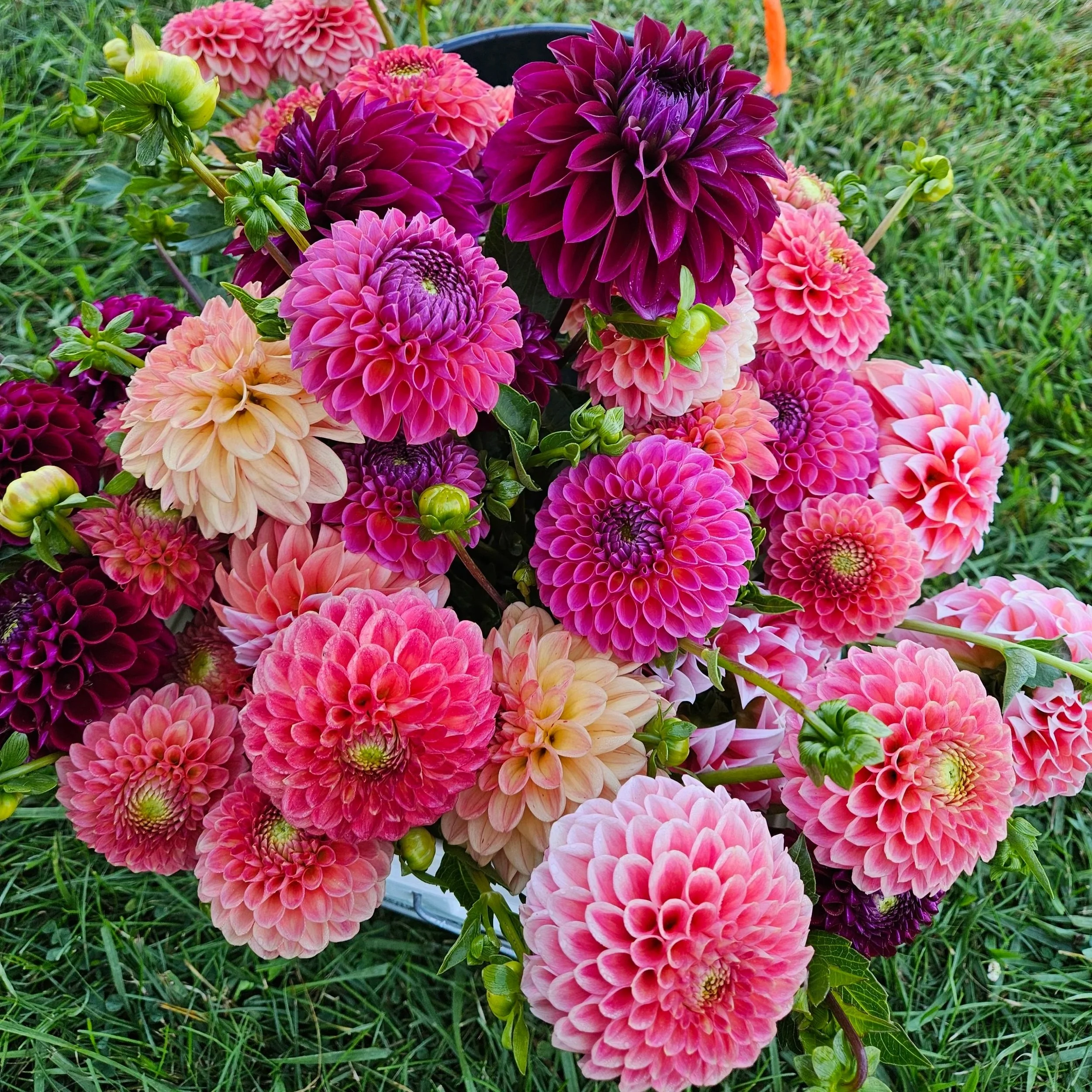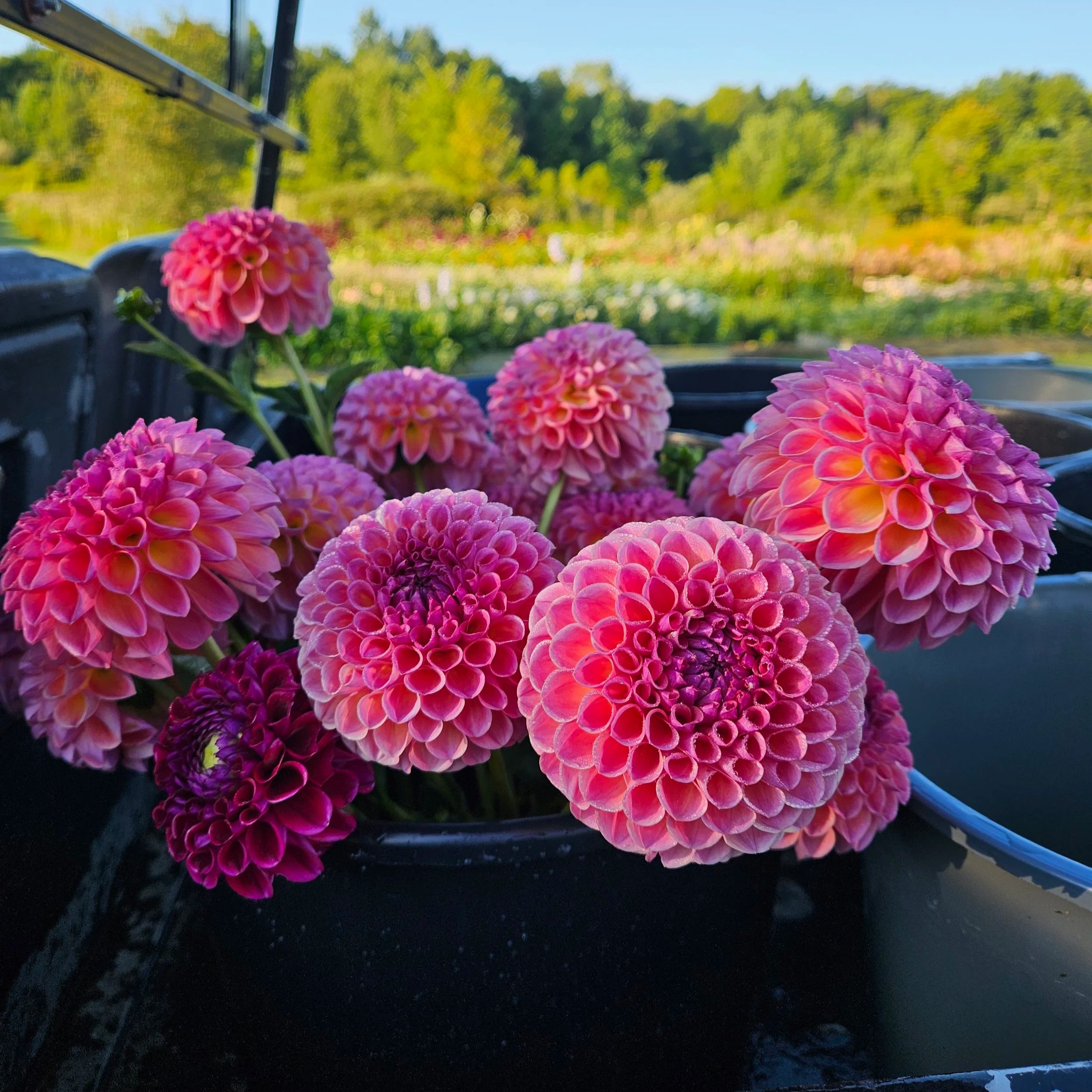
If you are new to growing dahlias or trying to overwinter your dahlias, please read our first blog post on the subject, which explains my dahlia bed set up and first year findings. Our second blog post covers the second and third years, and this blog post will cover what I saw this growing season after their fourth season in the ground and our coldest winter yet. As a reminder, this is something I first learned from Jennie Love of Love N Fresh flowers out of Philadelphia; her blog post is an incredible resource on the topic and I owe so much of my success to her. Also, I consider myself a very relaxed flower farmer; I am well aware that there will be loss and failure in flower farming, and I am willing to take the risk. If you are not prepared for a total loss, I do not suggest you try this!
Winter 2025
Our winter was the coldest we have had since I started overwintering my dahlias in the ground. We spent frequent amounts of time well below freezing and had minimal snow cover (or sun). We lost a fair amount of dahlia clumps. I’m estimating around thirty percent of our tuber clusters succumbed to freeze and rot. Most of the loss came from areas near the edges of our silage tarp which is less protected and is exposed to more moisture.
Spring 2025
Spring was a bit late this year, especially compared to last year (which was around 2-3 weeks sooner than we were used to). I took the tarp off the dahlias around Mother’s Day, which might have been the latest ever. Once it warmed up though, Mother Nature never looked back. We had an incredibly pleasant spring with a good amount of rain. The little white anemic looking dahlia sprouts were springing up from the leaf litter. After letting the sun green up the stems, for the next week or so, I fished around in the spots I didn’t’ see any growth and mostly found very large rotting clumps of tubers that were covered in decomposers such as pill bugs and centipedes, I was so happy to find so many critters doing the hard work. I did toss some of the rotten handfuls of tubers from the ground, but I was pleased with how efficient the bugs were. Over the next few weeks I planted the tubers I had dug and saved (I typically do that every year for back up), as well as some gifted to me by a friend. The added bonus of losing so many tubers was that I had space to introduce some new varieties.
In Conclusion
A thirty percent loss sounds like a lot, but in reality, dahlias that have been in the ground for 3-4 years are producing mass amounts of stems and blooms. Clumps get too big, plants get too overcrowded, and rows get unruly. So a thirty percent loss to a field that is replanted every season might seem quite devastating, however, it truly wasn’t too terrible. I did finally get to witness the true test of a cold Michigan winter, and for that I am grateful and pleasantly surprised with the outcome. I’d take a 30 percent loss any season to digging and storing and replanting each season. For me it was still worth it.
I did have some issues with such large plants; they needed so much more rain/water and fertilizer than I was prepared to offer them. They also flopped hard due to the sheer number of stems. They most likely need to be divided, which is a good problem. I could have probably dug up a couple tuber clumps in the spring and had enough tubers to fill ALL of those open spaces! The tuber clumps are epically large which is bad for stem overcrowding but if you think of it in terms of tuber storage, it’s actually pretty great.
Lastly, this summer was brutal in terms of heat and lack of rain. Absolutely brutal. Dahlias shut down and slowed down due to the intense heat and many growers, not just myself, saw a lack in production. Once mid September hit and we got a bit of rain and a few cooler days and nights, the dahlias TOOK OFF. It is amazing what a good rain and normal temperatures can do.
Despite the loss, I am still sold on overwintering dahlias.
This fall, I was so busy with wedding and event design that the farm took a back seat. I didn’t dig any dahlias up to store like I normally do. I did lay a little extra leaf mulch, and we tarped a bit better. I’m hoping those two extra precautions help keep the soil temp above freezing better than last season. Can’t wait to see what the 2026 season brings!